
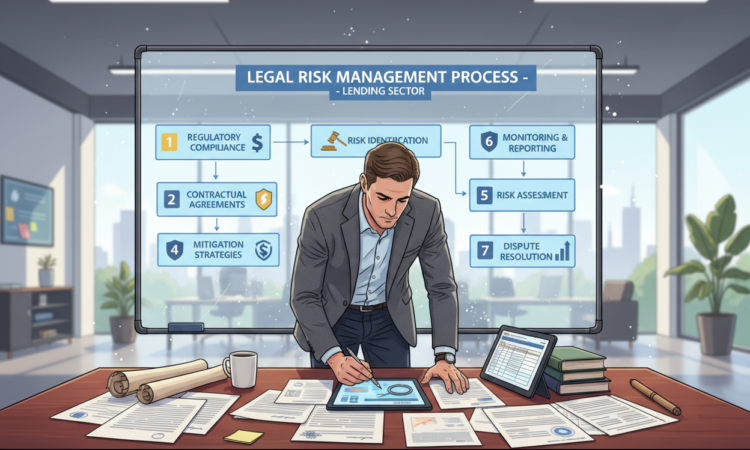
Legal Risk Management in Lending
Navigating private lending requires a sharp focus on legal risk management. This is especially true in markets like Costa Rica, where specific laws govern real estate-secured loans. We provide this guide to help you understand this critical framework.
Many organizations operate without clear guardrails. A Deloitte survey found 41% of non-banking firms lack a formal definition of legal risk. Furthermore, 61% of companies face regulatory proceedings, according to a 2024 litigation trends report. This exposure can lead to serious consequences for your business.
Our approach is deliberately straightforward. We focus exclusively on first-lien mortgage lending in Costa Rica. This means every loan is secured by a clean, conservative underwriting process. The goal is to protect your capital and assets from the start.
Effective risk management isn’t about avoiding complexity—it’s about managing it. We build a robust framework that addresses contract obligations and potential disputes before they escalate. This proactive strategy is key to long-term stability.
By understanding the local legal environment, you can make informed decisions. This guide offers the clarity needed to operate with confidence, avoiding the pitfalls of poor compliance. Let’s explore how to navigate these laws successfully.
Understanding the First-Lien Mortgage Structure

We build every loan around a simple principle: your investment must have the senior claim. This first-lien position is the cornerstone of secure private lending. It means your capital is the primary claim against the property if a borrower defaults.
This structure minimizes your risk from the start. We never participate in second liens because they add complexity and weaken your legal standing. Our focus is on clear, enforceable security.
Key Benefits of a First-Lien Position
Holding the first lien provides the strongest possible protection for your assets. You are first in line for repayment from the collateral sale. This priority drastically reduces recovery risk.
Avoiding second positions is a core part of our risk management. Secondary loans create contractual conflicts and delay resolutions. We keep the structure simple to protect you.
Essential Structural Elements for Protection
Our review process verifies no prior encumbrances exist on a property. We use specialized tools and data checks to ensure compliance with local regulations. This diligence is non-negotiable.
History offers clear lessons. The Punjab National Bank fraud case shows the catastrophic consequences of failing to verify collateral. We learn from such failures to safeguard your business.
Every loan contract is built on this disciplined framework. Visit gapinvestments.com to see how our first-lien philosophy prioritizes your safety.
Risk Controls and Conservative Underwriting Principles

Strong risk controls begin with knowing who you’re dealing with and what they can truly afford. This dual focus forms the bedrock of our protective framework.
We stop problems before a loan is ever funded. Our approach combines deep borrower verification with strict financial analysis.
Implementing Borrower and KYC Basics
Our Know Your Customer (KYC) process is rigorous. We verify the identity and legitimacy of every applicant.
This review uncovers red flags. In one case, a software engineer applied for $1.25 million for two non-existent companies.
Such fraud is a real issue. Our data checks and source verification protect your assets from these schemes.
Establishing Conservative Underwriting Processes
Conservative underwriting is the cornerstone of our risk management. We only approve loans that meet strict equity and collateral rules.
This process ensures the borrower’s financial profile aligns with the loan’s purpose. It is a disciplined review, not a negotiation.
We identify potential risks early. This protects your business from the operational disruptions of poor due diligence.
Effective risk management means knowing exactly who you lend to and why. It’s the first step in securing any contract.
Collateral and Title Due Diligence
Our due diligence process shifts focus to the property itself. We ensure it’s a reliable shield for your capital. This phase is where theoretical security becomes legally enforceable protection.
Comprehensive Collateral Summary
We start with a full summary of the property. This review confirms the asset’s value and condition align with our loan. It’s the first step in mitigating your risk.
Every detail is checked—from location to physical attributes. This summary provides the foundation for all subsequent legal checks.
Clean Title and Registry Verification
Clean title is non-negotiable. We use specialized tools to verify all documents are correctly filed in Costa Rica’s public registry.
This process prevents future disputes over ownership. It’s a core part of our risk management framework. Just as the 2018 Farm Bill sets a strict 0.3% THC limit for hemp, we enforce strict documentation standards.
Encumbrance and Liens Review
Our team performs a deep search for any hidden claims. We must ensure no prior liens exist that could jeopardize your first-lien position.
This thorough review safeguards your assets. It directly addresses potential legal risks before funding. Our activities maintain compliance with local real estate laws.
You can trust this diligent process. It provides the necessary protection for your investment. Visit gapinvestments.com to learn more about our standards.
Valuation and Equity Analysis for Stronger Protection
We translate property value into tangible safety through a disciplined 50% LTV guideline. This mathematical analysis is your final, crucial layer of protection.
Adhering to the 50% LTV Guideline
Our rule is simple: a loan never exceeds 50% of a property’s appraised value. This creates a massive equity buffer. It shields your capital from market dips and potential legal risk.
Cutting corners here is costly. A Ponemon Institute study found non-compliance costs 2.71 times more than compliance. Our strict LTV is a core part of our risk management, keeping your activities safe.
Equity Review and Risk Assessment Techniques
Our equity review is a detailed assessment. We use advanced tools to analyze current market data. This ensures our valuation reflects the true worth of your assets.
This process identifies potential issues long before they become problems. We document every step, creating a clear audit trail. This thorough review is your best protection.
For details on our 50% LTV policy, visit gapinvestments.com or contact +506 4001-6413.
Clear Terms and Proper Loan Closing Procedures
Proper loan closing transforms a promise into a legally protected asset. This final phase locks in your security and defines the rules of engagement. We treat it with the same rigor as our underwriting.
Ambiguity is the enemy of enforcement. Clear written terms are the foundation of every strong contract.
Importance of Clear Written Terms
Every loan document must spell out all obligations. This prevents disputes during the life of the loan. It sets expectations for both parties from day one.
Consider the real-world exposure. The EEOC filed 110 employment discrimination lawsuits in 2024. This highlights how unclear internal policies create legal risks for companies.
Our contracts avoid this pitfall. We define payment schedules, default triggers, and remedies in plain English. This clarity is your first layer of operational protection.
Steps for Proper Closing and Lien Registration
Our closing strategy follows a standardized process. We ensure all legal documents are executed correctly. Then, we file them with the appropriate authorities.
Formal lien registration is the critical step. It perfects your first-lien position against the borrower’s assets. We use specialized tools to track each filing’s status in real time.
This diligent approach minimizes operational disruptions. It secures your business for the full loan term. You avoid the types of issues that arise from ambiguous drafts.
Learn more about our professional closing procedures. Visit gapinvestments.com or call our USA/Canada line at 855-562-6427.
Ensuring Consistent Compliance and Documentation
Consistent compliance is not just a regulatory checkbox. It’s the operational backbone of secure lending. This discipline directly supports your overall risk management strategy within a complex legal environment.
Data security is a critical part of this framework. IBM’s 2025 report noted the average data breach cost dropped to $4.44 million. While this marks a decline, it underscores the high financial exposure poor practices create.
Maintaining Accurate Documentation Standards
We treat accurate documentation as a core component of our legal risk management. Every loan file is kept complete and audit-ready. This creates a transparent system for all parties.
We use automated tools to monitor changes in the law. This ensures our practices align with current regulations and obligations. It’s a proactive step for mitigating legal risks before they become disputes.
Our team reviews every file for accuracy and completeness. This diligent approach protects your business operations. It provides the clarity needed to navigate the private lending market with confidence.
For details on our documentation standards, visit gapinvestments.com or contact us via WhatsApp at +506 4001-6413.
Implementing legal-risk-management-lending Strategies
In today’s litigious environment, a reactive approach to legal exposure is a recipe for loss. A 2024 survey shows the median company faces six lawsuits, with 42% expecting more. This makes proactive monitoring essential for any lending business.
Framework for Monitoring Legal Risks
Our framework is designed to identify potential threats early. We track changes in laws and the broader legal environment that could impact your portfolio.
This system allows us to take corrective actions before minor issues become major disputes. It’s a core part of our overall risk management strategy.
Effective Documentation and Reporting Practices
Clear reporting keeps you informed. We provide regular updates on loan status and any relevant legal changes.
Our documentation practices ensure all contractual obligations are reviewed for compliance. This transparency is key to mitigating legal risks over time.
This disciplined approach protects your assets. For details on our monitoring strategies, visit gapinvestments.com or call 855-562-6427.
Risk Mitigation, Disclaimers, and Cautions
Our final note centers on the importance of clear disclaimers and realistic expectations. Transparency is a core part of our operating philosophy. We believe informed decisions are the best decisions.
This guide is for informational purposes only. It does not constitute a loan offer or a guarantee of any specific financial outcome. All lending involves inherent risk.
Key Disclaimers and Informational Notes
We use conservative strategies to manage risk, but there are no performance guarantees. You should always consult your own legal and financial advisors. Our process is designed to provide you with the best possible information.
We provide these disclaimers to ensure full transparency. Informed investors are better equipped to handle their own business risks.
Understanding Variable Outcomes and No Guarantees
The legal environment is always changing. A 2024 survey found 42% of companies expect more lawsuits. This underscores why we emphasize caution.
Market conditions and legal interpretations can vary. By understanding this variability, you better appreciate our conservative approach. We are committed to giving you clear, honest information about the risks and rewards.
For detailed information on our standard real estate loan terms in Costa, visit our website. You can also contact us via WhatsApp at +506 4001-6413.
Final Reflections on Secure Lending Practices
Sustainable success in lending hinges on integrating core safeguards into every business decision. Effective legal risk management forms the foundation of a successful private lending business. We are here to guide you through every step of this process.
By focusing on first-lien security, conservative underwriting, and clear documentation, we help protect your capital in the Costa Rican market. This disciplined approach to compliance creates a robust shield for your assets.
We encourage you to stay informed about the legal risks that affect your investments. Changes in laws and the business environment require a proactive management strategy. Our commitment is reflected in our rigorous risk management and practical advice.
Visit gapinvestments.com to learn more about our secure lending practices. Let us help you achieve your financial goals. For any questions about your lending strategy, reach out via WhatsApp at +506 4001-6413. Thank you for trusting us as your partner.
FAQ
What is the single most important legal protection in a real estate loan?
The first-lien mortgage is the cornerstone of protection. This legal structure gives you, the lender, the first right to the property if the borrower defaults. It ensures you are paid before any other creditor with a junior claim on the asset. We secure this position by properly registering the mortgage in the National Registry.
How do you verify a property’s title is clean before lending?
We conduct a thorough title and registry due diligence process. This involves obtaining an official Property Certificate from the National Registry. We meticulously review this document to confirm the current owner, check for any existing liens or encumbrances, and ensure there are no legal disputes or annotations that could threaten your priority claim on the collateral.
Why is a 50% Loan-to-Value (LTV) ratio considered a conservative standard?
Adhering to a maximum 50% LTV is a key underwriting principle for risk mitigation. It means you are lending no more than half of the property’s conservatively appraised value. This creates a significant equity cushion, protecting your capital against market fluctuations, valuation errors, or the costs of a potential sale if you must foreclose.
What are the risks of not having a written loan agreement?
Relying on a handshake or vague terms is a major legal exposure. A clear, written contract is non-negotiable. It definitively outlines the loan amount, interest rate, payment schedule, default consequences, and the terms of the mortgage. Without it, resolving disputes becomes difficult, and enforcing your rights in court can be nearly impossible.
What ongoing compliance is needed after the loan closes?
Consistent documentation is crucial. You must keep impeccable records of all payments received, any correspondence with the borrower, and updated proof of property insurance. We recommend maintaining a compliance checklist and calendar to track payment dates and annual insurance renewals, ensuring no protective measure lapses.
Can these strategies guarantee I won’t have a problem or lose money?
No. These are robust risk management strategies, not guarantees. We implement them to significantly reduce your exposure and strengthen your legal position. However, all lending carries inherent risk, including borrower default, prolonged legal processes, or unforeseen market changes. Our framework is designed to protect you, but outcomes can vary.
Article by Glenn Tellier (Founder of CRIE and Grupo Gap)
Sign up to start investing today!
